ATA Enneagram Type 6 Personality Style
ATA Enneagram 6 – Striving to Feel Secure
ATA Enneagram Type 6s interact with the world by Striving to feel Secure.
Type Sixes find security in being part of something bigger than themselves, such as a group or tradition. They are careful, responsible and protective of the welfare of the group. They focus on maintaining consistency, tradition and cohesion. When they overdo their Striving to Feel Secure they may fail to take the risks necessary for high performance and settle for mediocrity. When stressed, Sixes may fear that if they relax their guard they will be vulnerable to possible dangers.

Chief Asset: Support. Sixes are steadfast, responsible, and dependable. They are determined to perform their duty, to do what is best for the group, and to provide for the needs of others.
What They Like in Others: Dependability, support/protectiveness, hard work.
What They Dislike in Others: Ambiguity, undependability, deviance (from the norms of the group).
How They Frustrate Others: Complaining, indecision, lack of trust.
Approach to Problem Solving: “I need to find out what else can go wrong and who I can depend on.”
Belief About Work: “Things work best when I know everyone’s agenda.”
How Others See Sixes: Engaging, upbeat, team-oriented, caring, but sometimes anxious, suspicious, combative, and fearful.
Sixes Get Into Trouble When They Tell Themselves: “Someone else represents an idealized authority that I can either cling to or rebel against.”
Enneagram Sixes Leadership & Communication Style
The Type Six Leader: The Guardian
The High Side of the Guardian: Sixes identify internal and external threats to the organization, and protect group cohesion.
The Low Side of the Guardian: Sixes can focus too much on what could go wrong and ignore what could go right.
Where They Shine: Anticipating problems. Sixes thrive in situations where they have the opportunity to play Devil’s Advocate and prepare the team for potential difficulties.

ATA Enneagram Type 6 Communication Style:
- Sixes tend to be passionate and reactive.
- They hold strong opinions, but often seem to be questioning themselves or weighing options.
- They often seem to focus on the negative and complain; this is their way of finding out where others stand on issues.

Derailers for Type Six
- Pessimism: Focusing on problems rather then solutions; looking for what could go wrong rather than what could go right; includes complaining.
- Suspicion: Doubt about the good will of others’ motives and agenda.
- Holding back: Fear of taking risks and resistance to assuming leadership and authority.
- Indecisiveness: Inability to settle on one course of action or to trust that your decision is the correct one. Will sometimes use combativeness to feel certain.
- Combativeness: Instinctively taking the devil’s advocate role; hostility toward change and “outsiders.”
- The “Dog with a Bone” Syndrome: Relentless persistence in making your point of view heard and winning approval for your ideas.
Blind Spot for ATA Enneagram 6: Complaining
Sixes are often unaware of their tendency to complain and its effect on their relationships. Because Sixes do not trust their own thought process they are constantly trying to gauge other people’s reactions (to test the waters) to a given stimulus to see if there is a threat that needs attention. They complain to see if people agree or disagree with them as a way of finding where people stand.
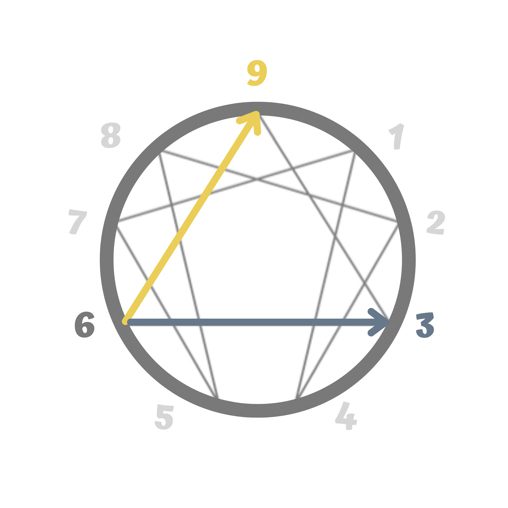
Connecting Points for Enneagram Type 6
Support Strategy at Point 3: Striving to Feel Outstanding
Sixes are often productive and dependable members of the group, finding a need and filling it. Sometimes, however, they worry they are not being valued as a team member and become fixated on ensuring others recognize their contributions.
Neglected Strategy at Point 9 – Striving to Feel Peaceful
While Sixes are often able to let their guard down around those they trust, there are critical times when they resist feeling peaceful because of a fear that it will invite catastrophe.
Listen to the Conversation about Enneagram Type 6
The Awareness to Action Enneagram Podcast
In this episode of the Awareness to Action Enneagram podcast, Mario Sikora, María José Munita and Seth “Creek” Creekmore talk about the Enneagram Type Six, “Striving to Feel Secure,” with special guest, Chelsea Jackson. The four discuss why this type of vigilance and alertness is misunderstood, drawing from Chelsea’s perspective. Chelsea shares how it truly feels to be a Type Six on the inside and talks about the disconnect with how this type feels about themselves versus how others view them.
“Particularly in the corporate world, where I work, it’s a type that can frustrate people because of their perceived hesitancy, their perceived negativity about things, but what I find is that when the times get tough, Sixes are actually really prepared and they’re very effective people in those situations.” -Mario [06:05]
“Besides Type 6 personality style being misunderstood in the Enneagram world, I think they’re sometimes hard to read in the real world. People, I think, have a harder time making sense of their behavior or jump very quickly into conclusions to why they’re doing certain things when in reality their inner process is sometimes very different to what people perceive of them.” -María José [07:17]
“What we’re all kind of expressing… this confusion that a lot of people in the Enneagram community have around Sixes.” -Creek [08:50]
“I have a pretty good BS radar. Like I can know when you’re not being authentic. I can know when you’re just asking me for lip service, but you’re not actually going to do what I suggest. And that makes me not want to be invested.” -Chelsea [47:58]
ATA Enneagram Type 6 Subtypes
The striving for security in ATA Enneagram Type Six is distinctly expressed through the three Subtypes.
| SECURE PRESERVING | SECURE NAVIGATING | SECURE TRANSMITTING |
|
|
|
Explore the Other Types
Growth for ATA Enneagram Six: Evidence
Sixes, who are striving to feel secure, often forget to take into account their past successes and accomplishments when weighing their potential for success in a current or future activity. It is natural for them to focus on threats and danger, and they may fear that focusing on past accomplishments may make them complacent, and thus vulnerable to those threats. Thus, they often focus on all the things that went wrong in the past and that could go wrong in the future. They often end up underestimating their capabilities and becoming unnecessarily risk-averse.
Evidence of past accomplishment, written down and recorded, serves as the reminder of their true capabilities and provides perspective. The act of remembering and detailing their accomplishments and capabilities helps Sixes develop the confidence they need to accurately assess their circumstances and evaluate risk accordingly. Making a thorough list of their skills, talents, and achievements serves as a grounding activity, helping them redirect their attention temporarily from scanning for threats to remembering their strengths and seeking opportunities to employ them.
Start Your Journey Today
Executive Coaching
Preparing high-performing
leaders to scale effectively.
Group programs
Creating understanding around group
behavior through the Enneagram.
Enneagram OnDemand
Our asynchronous, self-directed introduction to personalities at work.
A Fun and Informative Deep Dive into Understanding the ATA Enneagram 6 Personality
Mario and TJ are joined on this episode of “The Enneagram in a Movie Podcast,” by special guest, Russ Hudson, to discuss the films of Martin Scorsese through the lens of Enneagram Type 6, “Striving to Feel Secure.” The films they discuss include “Mean Streets,” “After Hours,” “Goodfellas” and “Cape Fear.”