
ATA Enneagram Subtypes
The Enneagram Subtypes Explained
What are the ATA Enneagram Subtypes?
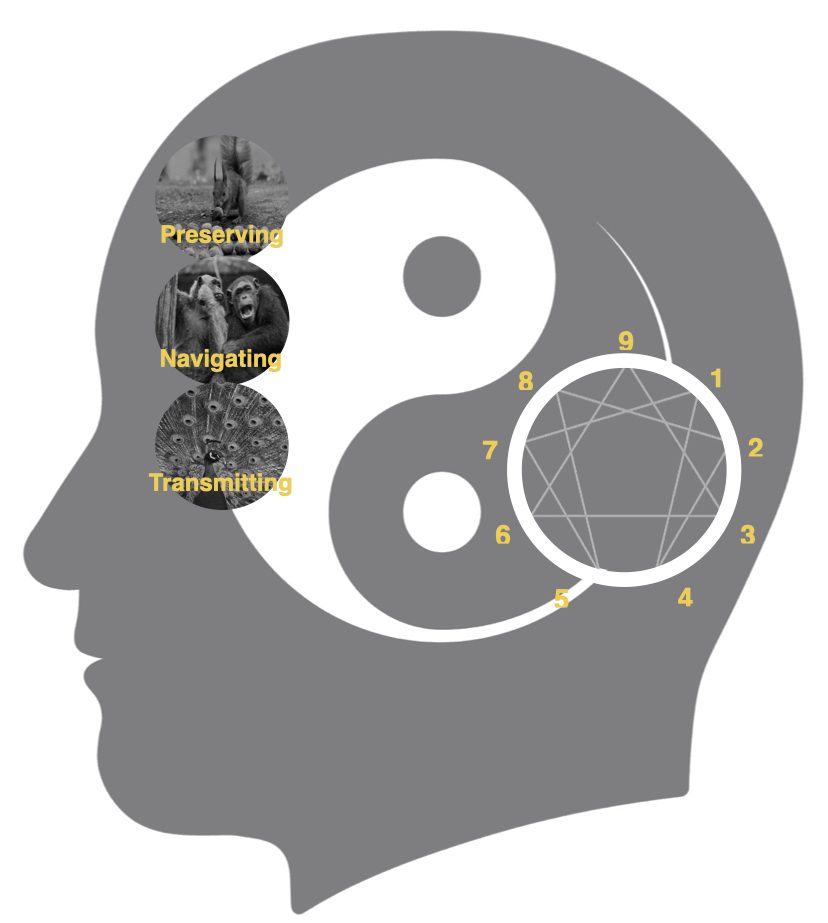
The 27 Enneagram Subtypes from Awareness to Action International represent the unique intersection of three instinctual biases—preserving, navigating, transmitting—with the nine Strategies of the ATA Enneagram. Each of the 27 subtypes forms a distinct profile, reflecting the nuanced ways an individual’s instinctual priorities and adaptive strategies shape and influence their personality, relationships, and personal growth.
By combining these dimensions, the 27 Enneagram subtypes offer a rich and detailed understanding of human behavior and motivation. They illustrate how instinctual drives and core strategies work together to create a comprehensive and personalized framework for self-awareness and development.


Why Are the 27 Enneagram Subtypes Important?
The Nuanced Layers of Personality
The Enneagram subtypes of the ATA approach provide a deeper understanding of personality beyond the core Enneagram types. By examining the interplay between instinctual biases and strategies, they reveal the subtleties and complexities that make each person unique.
For example, the subtypes of Enneagram Type One all share the same core drive (striving to feel perfect) but channel it toward different instinctual priorities. This layered perspective enhances our ability to understand ourselves and others in a more nuanced and meaningful way.
How the 27 Enneagram Subtypes Work?
The Intersection of the Instinctual Biases and the Types
Each subtype is a combination of the two dimensions of the ATA Enneagram:
- Dimension 1: The Three Instinctual Biases
- Preserving: Focused on safety, comfort, and practical needs.
- Navigating: Oriented toward group dynamics and social belonging.
- Transmitting: Prioritizing intensity, connection, and attraction.
- Dimension 2: Enneagram Strategies
- 9 Types: The nine core strategies are rooted in specific drives or motivations, such as striving to feel secure, perfect, or peaceful.
This dynamic pairing creates subtypes that highlight how instinctual drives shape and modify the way each Enneagram type pursues its core strategy.
Exploring the 27 Enneagram Subtypes
The Interplay of Instinctual Biases and Strategies in Everyday Life
The Preserving One (P1)
Theme: Perfect Preserving
P1s focus on perfection by addressing nesting and nurturing impulses. As Preservers, they are attuned to safety, resources, well-being, and health. True perfectionists, they pressure themselves to get things right, especially in their environment. Their focus may be on work details, responsibility, or personal health and finance. P1s prioritize security and orderliness, with a self-controlled, cautious approach to decisions. They bring thoroughness and attention to detail, often delving into even small inconsistencies to ensure things are done correctly.
The Navigating One (N1)
Theme: Perfect Navigating
N1s navigate the social domain by striving for perfection. As Navigators, they are attuned to hierarchy, status, and relationships. They pressure themselves to act perfectly in social situations, maintain a good reputation, and avoid mistakes. More approachable than other Ones, they excel at understanding group dynamics and ensuring others follow social rules. Their focus on fairness and behavior makes them skilled at managing interpersonal relationships and group harmony.
The Transmitting One (T1)
Theme: Perfect Transmitting
T1s express their instinctual behaviors through striving for perfection. As Transmitters, they focus on positioning themselves to be noticed and make an impact. They maintain high personal standards to avoid criticism and demonstrate personal excellence, aiming to set an example for others. Their focus is on improving themselves and the world around them, wanting to look, act, and live right, while encouraging others to do the same.
The Preserving Two (P2)
Theme: Connected Preserving
P2s express nesting and nurturing behaviors through a strategy of striving to feel connected. Attuned to well-being and safety, they face conflicting drives: focusing on their own needs while connecting with others. This makes them less social than other Twos, often maintaining a tight circle of trusted friends and family. They are supportive and giving to those close to them but can also be demanding. P2s are likable, attentive, and approachable, but they set strict boundaries and are quicker to distance themselves than N2s or T2s.
The Navigating Two (N2)
Theme: Connected Navigating
N2s navigate social dynamics by striving to feel connected. Outgoing and expressive, they excel at networking and reading group dynamics to identify high-status individuals. N2s derive their sense of identity from their connections, often working to ingratiate themselves with influential people. They take pride in bringing people together, particularly in prestigious social causes or groups, and feel fulfilled by making a meaningful impact on their community or industry. Ultimately, N2s are driven by a genuine desire to make the world better while gaining recognition for their contributions.
The Transmitting Two (T2)
Theme: Connected Transmitting
T2s express attracting and bonding behaviors through a strategy of striving to feel connected. They are highly attuned to how to be noticed and make an impact. With a strong need to connect, T2s aim to merge with others, making them the subtype with the most drive for close engagement. Outgoing and empathetic, they excel at making others feel special and appreciated. However, their emotional volatility can surface if they feel ignored or unappreciated. When they learn boundaries, T2s become supportive champions; without them, they may become angry or punitive.
The Preserving Three (P3)
Theme: Outstanding Preserving
P3s combine nurturing instincts with a drive to feel outstanding. They focus on productivity and gain value from accomplishing tasks and staying active. They feel uncomfortable when not being productive and often create to-do lists, taking pleasure in crossing off completed tasks. Although they seek approval, P3s are less image-focused than other Threes. Their appearance is typically neat and appropriate, but not designed to stand out. In their work and personal life, they prioritize efficiency and accomplishment over external validation, aiming to feel valued through their productivity and the impact they make.
The Navigating Three (N3)
Theme: Outstanding Navigating
N3s navigate social situations by striving to feel outstanding. Instinctively attuned to hierarchy, identity, and status, they aim to appear socially acceptable and respected. Skilled at reading group dynamics and corporate politics, they refine their networks and adapt easily to different environments. While polished and charming, their ability to shift to meet the expectations of influential people can make them seem chameleon-like. This adaptability is key to their success but may also be seen as a lack of commitment to core values.
The Transmitting Three (T3)
Theme: Outstanding Transmitting
T3s express bonding instincts through a strategy of striving to be outstanding. Driven by a need for achievement, they relentlessly push for improvement and success. Skilled at self-presentation, they embody traits admired in their environment. Fast-paced and impatient, they get frustrated when obstacles arise. Though they appear self-confident, T3s care deeply about others’ perceptions, and their confidence can falter if they feel misunderstood. Often charming, T3s are strategic in who they impress, planning their social interactions rather than relying on spontaneous charm.
The Preserving Four (P4)
Theme: Unique Preserving
The Navigating Four (N4)
Theme: Unique Navigating
N4s navigate the social domain by striving to feel unique. Instinctively attuned to identity, status, and group dynamics, they often compare themselves to others. They desire to fit in but struggle to maintain their individuality, leading to a sense of standing on the edges of the group. Unlike P4s and T4s, N4s are less competitive and more focused on their identity search. Their envy stems not from others’ success, but from their own lack of self-identity. N4s often try on new identities, but their shifting nature can make them seem like Sevens.
The Transmitting Four (T4)
Theme: Unique Transmitting
The Preserving Five (P5)
Theme: Detached Preserving
The Navigating Five (N5)
Theme: Detached Navigating
The Transmitting Five (T5)
Theme: Detached Transmitting
TYPE SIX
The Preserving Six (P6)
Theme: Secure Preserving
The Navigating Six (N6)
Theme: Secure Navigating
The Transmitting Six (T6)
Theme: Secure Transmitting
TYPE SEVEN
The Preserving Seven (P7)
Theme: Excited Preserving
The Navigating Seven (N7)
Theme: Excited Navigating
The Transmitting Seven (T7)
Theme: Excited Transmitting
TYPE EIGHT
The Preserving Eight (P8)
Theme: Powerful Preserving
The Navigating Eight (N8)
Theme: Powerful Navigating
The Transmitting Eight (T8)
Theme: Powerful Transmitting
TYPE NINE
The Preserving Nine (P9)
Theme: Peaceful Preserving
The Navigating Nine (N9)
Theme: Peaceful Navigating
The Transmitting Nine (T9)
Theme: Peaceful Transmitting
Common Challenges with the 27 Enneagram Subtypes
Mistyping and Stereotyping
Overlapping Dimensions:
Similarities between a subtype’s instinct and strategy—such as Preserving with Ennea-type Six’s need for security—often result in misidentification.
Subtype Stereotypes:
Certain subtypes, like the Preserving Five (P5), become the default image for their Ennea-type, overshadowing other subtype variations.
Contradictory Characteristics:
Atypical Subtype Profiles (Sometimes Inaccurately Called “Counter-Types”)
Some subtypes, like the Transmitting Nine (T9), exhibit seemingly opposing traits. Their transmitting bias leads to assertiveness, while their Nine strategy focuses on restraint and peace. This can lead to mistyping, such as confusing T9s for Ennea-type Threes.

Countering the Idea of “Counter-Type”
A Better Explanation of Atypical Enneagram Subtypes
There’s a common idea in the Enneagram world that explains why some subtypes don’t resemble the ‘typical’ versions of their types. This concept, often referred to as “counter-types,” suggests that certain subtypes act against the vice or fixation associated with their Ennea-type. However, this reasoning can feel arbitrary and overly constructed, raising more questions than it answers.
Understanding “Atypical” Subtypes
These subtypes don’t align with the stereotypical characteristics of their Ennea-types, leading to confusion and misinterpretation. For instance, Claudio Naranjo described the Transmitting Six as going “counter” to the fear of the Six, or the Navigating Eight as going “counter” to the lust of the Eight. However, this explanation lacks a logical foundation, leaving us with a vague “just because” rationale. Examples of these so-called “counter-types” include: Preserving Three, Navigating Eight, Transmitting Six, and Transmitting Nine.
A More Sensible Explanation:
Affective Tension
The ATA Enneagram Model offers a better framework for understanding these contradictions: the dynamic tension between the instinctual bias and the Ennea-type strategy.
Instinctual Bias Affective Tones:
- Preservers: Restrained and self-controlled.
- Navigators: Malleable and adaptive to their environment.
- Transmitters: Assertive and expressive.
When the affective tone of the instinctual bias aligns with the Ennea-type strategy, we see what is considered a “typical” subtype.
Examples include:
- Preserving One
- Preserving Six
- Preserving Five
- Navigating Nine
In contrast, when the instinctual bias and strategy create an affective conflict, an internal tension arises. This tension results in enneagram subtypes that diverge from their expected type traits.
Examples include:
- Preserving Three
- Navigating Eight
- Transmitting Six
- Transmitting Nine
Moving Beyond “Counter-Types”
Rather than relying on the “counter-type” concept, it’s more effective to recognize and account for the nuanced interplay between instinctual biases and strategies. This approach recognizes the inherent complexity of human nature, making it easier to understand and appreciate the diversity within the 27 Enneagram Subtypes.
People of all Enneagram subtypes can be successful; and people of all Enneagram subtypes can struggle.
How can the 27 Subtypes help with self-awareness and development?
Understanding your ATA Enneagram Subtype reveals the hidden patterns holding you back. By identifying these obstacles, you can overcome challenges, enhance collaboration, and unlock your full potential.
Let us help you take the next step toward growth and success.

Testimonials
Start Your Journey Today
Executive Coaching
Preparing high-performing
leaders to scale effectively.
Group programs
Creating understanding around group
behavior through the Enneagram.
Enneagram OnDemand
Our asynchronous, self-directed introduction to personalities at work.
Summary
The Value of Combining Instinctual Biases and Strategies
While the instinctual biases and strategies can be understood separately, their true power emerges when combined. The ATA 27 enneagram subtypes offer a nuanced, multidimensional view of human nature, enabling us to move beyond oversimplified typing and uncover deeper layers of self-awareness and interpersonal understanding.
Whether you’re striving to improve your leadership skills, enhance team collaboration, or better understand your own motivations, the Awareness to Action Enneagram offers the insights and resources you need to succeed.